
“During my frequent ponderings on the burning desire with which the patriarchs longed for the incarnation of Christ, I am stung with sorrow and shame. Even now I can scarcely restrain my tears, so filled with shame am I by the lukewarmness, the frigid unconcern of these miserable times.” (Sermon 2 on the Song of Songs)
Bernard of Clairvaux, a French abbot and mystic, wrote these words, lamenting the abysmal state of Christianity, in the twelfth century. Most of us today would consider the twelfth century the height of religiosity, yet even then leaders were looking at the past longingly—reminiscing about a time when people actually cared about God.
But surely you will say, things really are different today? Things must be worse?
Maybe, maybe not. Those of us who live in the West do live in secular societies. A culture in which the Christian faith is no longer the default faith—belief in God is simply one of many options. The Catholic philosopher Charles Taylor spends approximately 800 dense pages tracing the rise of Western secularism in his influential book, The Secular Age, and plenty others have split ink (though probably not as much as Taylor…) exploring these trends as well. Therefore, it is not my intent to rehash these debates here in abbreviated form, but to offer an alternative perspective rooted in both my work as a historian and my own personal faith.
In the beginning…no not that beginning. In the beginning of the Christian church, Christianity was just one choice in many as well. The ancient world, specifically the Roman Empire, the place in which Jesus was born, lived, and died (and was resurrected!), had great religious diversity. There were many gods, philosophies, and mystery cults. From a purely utilitarian perspective, Christianity was the worst possible choice one could make. The faith was actively persecuted at times and always a little suspect. Why be a Christian when you knew that there was a chance that the state might arrest you, torture you, or even kill you for your faith? Yet people were motivated by the transformative message of the Gospel and the difference that Jesus made in their lives.
If you live in the United States, it is relatively easy to be a Christian. Someone might make fun of you or make inaccurate assumptions about you, but no one is looking to throw you into an arena with a hungry/angry lion. Yet, it is in this context that it seems that people are less committed to the faith. How can this be? When I teach about ancient Christianity, I sometimes even have students look back longingly on the persecuted Roman Christians—things were rough, but at least the church was growing! We now often ask: Who or what can we blame this current decline on? As a historian I am hesitant to do that; causation is tremendously hard to prove, and it is even harder to prove when dealing with so many different strains of belief and so many contexts. The “West” is not a monolith (nor is that even very easy to define), and our histories are wildly different as are our present situations.
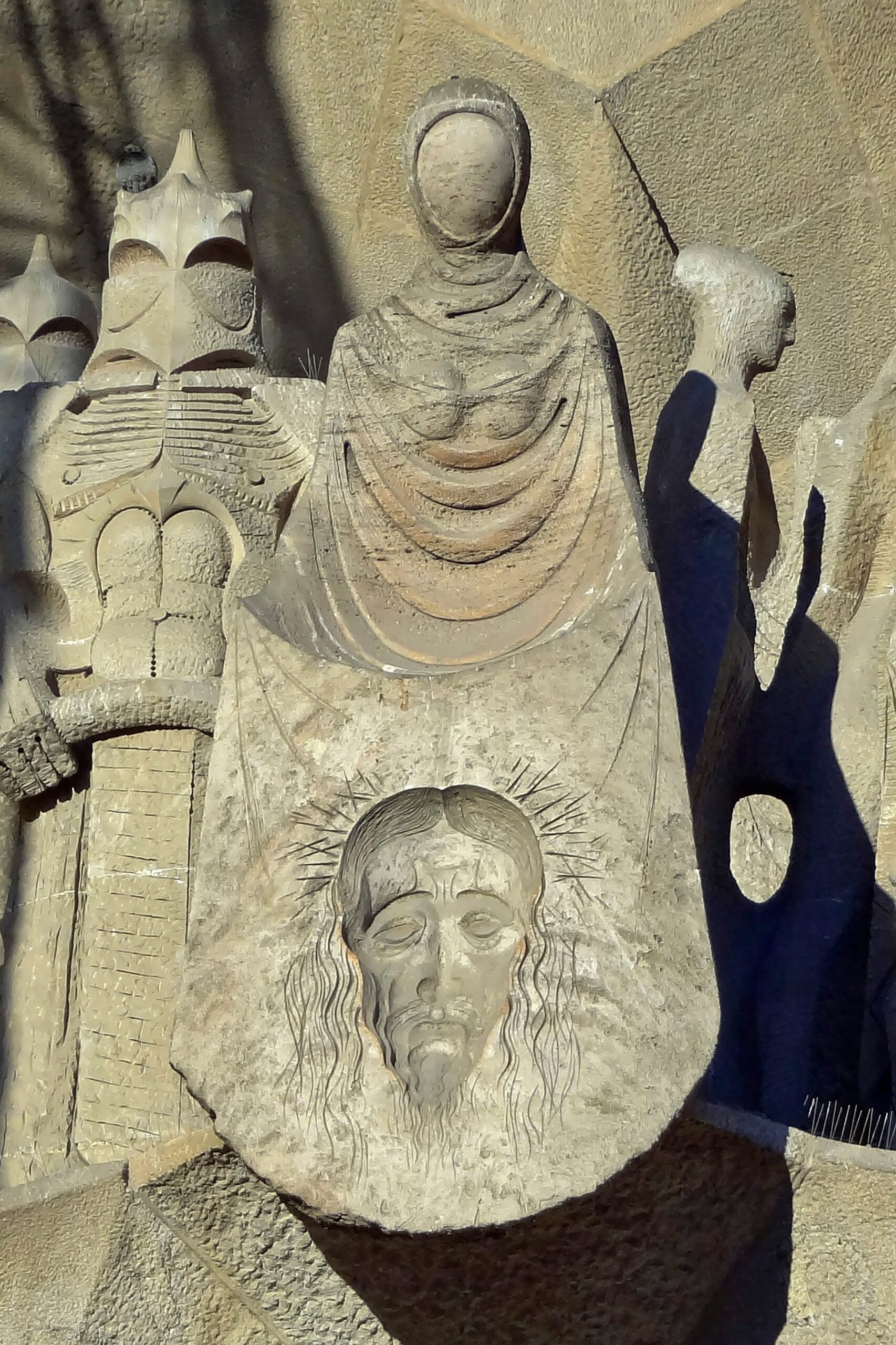
The truth is when looking at the long history of the Christianity, there have been plenty of lows. There has been corruption, conflicts, misdeeds, and times of rapid decline of the faithful. After the Islamic conquests in the seventh and eighth centuries, half the world’s Christians found themselves as religious minorities, and most of those communities eventually converted to Islam. This situation felt like a terrifying existential threat to both the Catholic and Orthodox faiths at the time. Following a period of great societal turbulence in the late Middle Ages, the Western Church fell into conflict and schism. This was so bad that Christians wondered if the plague was sent as punishment for the failure of the church. In the aftermath of the Protestant Reformation, religious tensions and violence plagued societies for centuries. Christianity has been brutally persecuted by modern governments which have left Christians once again fearing for their lives. Then there is the apathy in our own context, which brings its own anxieties and fears. These are just a few examples of countless from a 2000-year-old global faith.
Yet, despite these past troubles, Christianity not only survived but thrived. There are 2.2 billion Christians in the world today. That is an astounding number of people. We know that the center of Christianity is shifting away from the West, but even here, there is still plenty of hope for the church. There is evidence that Gen Z is becoming more religious, and in recent years there seems to be more interest in the church in general. I personally understand that interest.
I am an adult convert to Christianity, specifically Catholicism, though I got there via a couple of Protestant denominations. Prior to my conversion, I was a typical young millennial who was highly critical of institutional religion—especially Christianity which seemed to me anti-intellectual and coercive. Even at my most hostile, though, something felt missing. I couldn’t articulate what that was, but it sent me on the typical path of a seeker. I explored different types of religion, and despite my aversion to Christianity, it felt as if Jesus was always there on the edges, wearing me down. I felt His presence even when I was determined to avoid Christianity at all costs.
In the end, Jesus won me over, and I explored Christianity. I tried churches. I prayed. I had a conversion moment—not quite as dramatic as Augustine’s in the garden, but it was a distinct moment of change. I was not a Christian, then I was. It was a subtle but profound shift in my very being.
It is easy to be pessimistic about religion in America, but we cannot discount the power of God. Nor can we forget what Christianity offers people—it isn’t coercive; the Christian life is beautiful and life-giving, especially compared to what the world has to offer. Wealth and power are often the goals of this world, but they cannot comfort the soul. Hedonism may be fun for a bit, but it ultimately leaves one spiritually empty. Glory and honor will fade as quickly as it arrives. In the end, it is all vanity and a chasing after wind.
It is instead Jesus Christ who offers us life and transformation; He offers meaning in our lives. I don’t know what the future holds for the American church, but I do trust that God is active in our lives and that like so many times before in our history, something vibrant and live-giving will emerge.