

“Mom, how are you doing this right now?” my daughter grumbles at me on our annual camping trip. We are hiking up a giant sand dune at Sleeping Bear Dunes, on the shore of Lake Michigan. Every summer she has been carted to camping sites all over North America, from the Smoky Mountains to the Canadian Rockies. Hiking has always been a staple. But this summer she is thirteen.
Hiking up a giant hill of sand under the sharp August sun was a challenging physical task. But what was really exasperating her was that I was doing it beside her, with her baby sister in a hiking backpack. “Aren’t your legs on fire?!”
I looked at her and said, “Well yes, they are. But you see, we come from a long line of stubborn Norwegian-blooded immigrants who carry a chip on their shoulder and believe that nothing worth having is ever done without a bit of pain. This is nothing.” As we took a couple more steps together, she mumbled, “I definitely did not inherit that trait.”
Later I was telling this story to my dad and laughing about my daughter’s response. He was quiet and said, “Don’t let her forget that she has that trait inside her too. She just hasn’t needed it yet.”
I thought about his response for days.
The trait I was highlighting on the dune that day was something my family lovingly called “stick-to-it-iveness,” a value next to holiness, cultivated and passed down from my grandfather, Andy, received from his mother before him. My own daughter has no memory of Grandpa Andy, as he died when she was only four months old. But for the first two years of her life, I rocked her to sleep and sang every hymn he ever taught me over her. I prayed that she would walk in the way of her great grandfather, and I prayed that I would remember him and that they would belong to each other.
It was really my own dad who made that possible. He has never stopped telling us the tales of stubborn Grandpa Andy, stories of sticking-to-it even to the point of foolishness. We laugh, and sometimes he cries, but what has happened is that those stories feel like they belong to us.
Eight months after the dune hike, my daughter met devastation and disappointment in the form of failure to advance in a competitive school project that, in my non-biased opinion, led to missing an award she deserved and had worked toward for months. She cried about it for days. Eventually she emerged from her sorrow and said, “Don’t worry, mom. I come from a long line of people who believe in stick-to-it-iveness. I’ll get it next year.”
What we pass on
I think about the woman who is sitting in the third pew of nearly every congregation I have ever known. She has outlived her husband, her closest friends, and most of the people who knew her when she was young. She carries decades of faith, of answered and unanswered prayer, of a God who has been faithful through things she has never spoken aloud to anyone. Not far away sits a teenager who knows more people online than he does in his own neighborhood, and who has never once been asked what he actually believes about God.
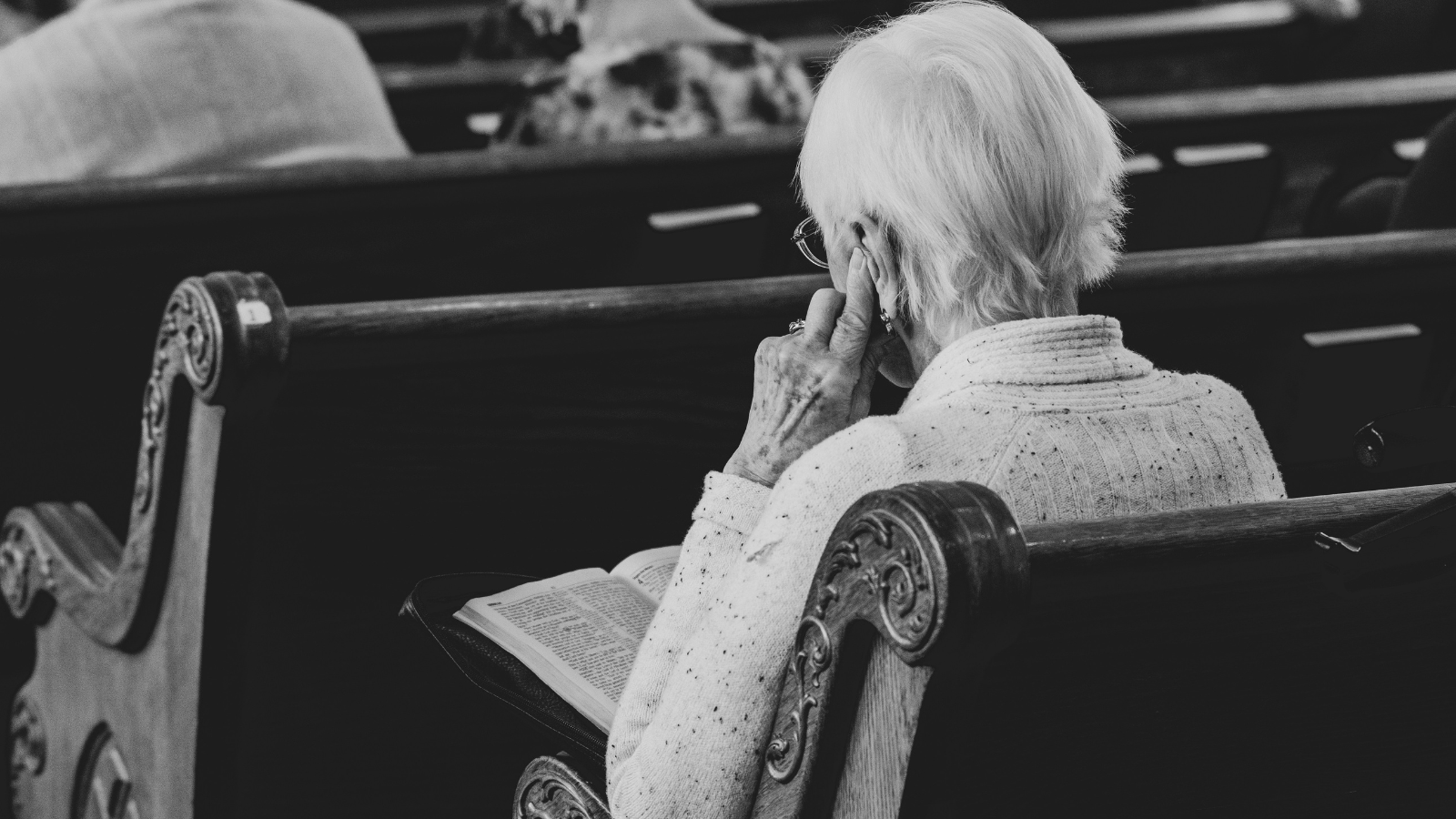
And in the middle is everyone else, trying to hold it all together, trying to figure out how to raise kids and walk with parents through the end of life, learning about memory care in the small window of time when the baby is down for a nap.
None of them have been invited into the long story.
We know that faith is not formed through passive participation in church services alone. We come to understand it by living the life of faith beside others. Sometimes that formation happens in a rocking chair, in the dark, before a child has words for any of it. Being a Christian community means that we beautifully and uniquely belong to one another, drawn together not by choice or affinity but by Christ, and that belonging is larger than any one of us or our nuclear families. We can be drawn up into that reality through the practice of storytelling.
Storytelling, though, has a shadow side. It can become performative, a testimony polished for an audience, a faith statement recited at confirmation and then set aside. What keeps it honest is friendship. My father never performed those Grandpa Andy stories. He told them because he loved him and because he loved us, and we received them because we loved him back. The stories lived inside that love.
This is harder to cultivate in a congregation than in a family, and also more remarkable when it happens. We are people grafted together by Christ, asked to become tellers of true things to people we did not choose. The grandmother with unanswered prayers and the teenager with unasked questions are not natural companions. But the church has always known how to make room for exactly that kind of belonging. We were never meant to be a passive audience to one another’s lives. We were meant to belong to each other, and to keep saying so, in the particular and irreplaceable language of story.
Check out a resource from Kurty’s work with Luther Seminary’s Nurturing Children Through Worship and Prayer Initiative, funded by the Lilly Endowment, below.

This is an excellent writing, Kurty! I loved your opening story, and how your daughter could later echo your statement from your hike conversation during a difficult time in her life. You developed a word picture for me of how the people sitting in the pews of our churches each have stories to tell, and it is important that these stories be told – both for the “teller” and the “hearer.” Storytelling is becoming a lost art. And of course, storytelling has a special richness within our families. Thanks, Kurty!
Thanks for this post, Kurty!