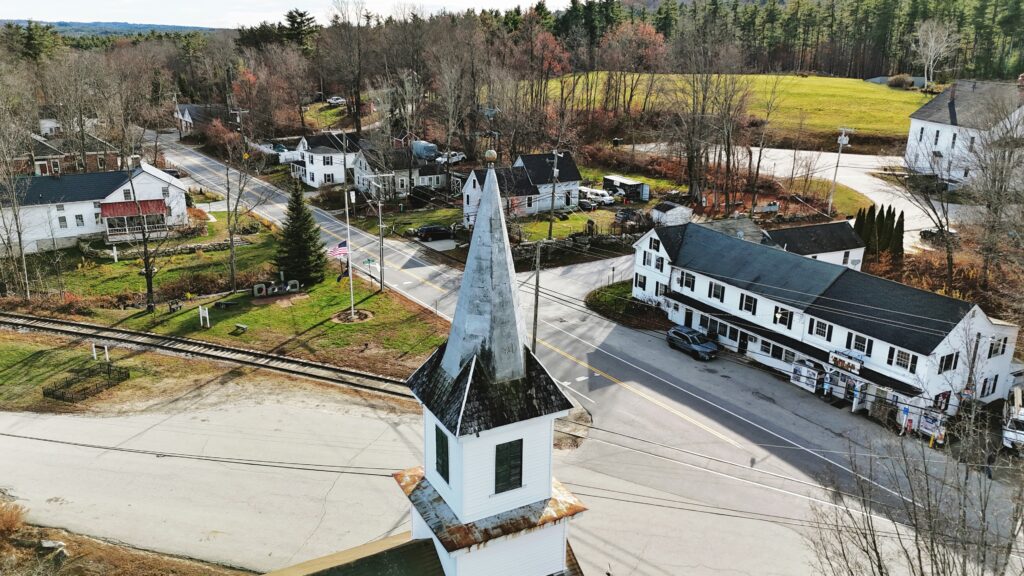
What does sustainable ministry look like in rural and small town contexts?
I receive this question from my students at Luther Seminary every single term that I teach “Funding Forward”: a course that explores more financially sustainable, mission-aligned models for ministry. The first time this question came up in winter of 2021, I was tempted to shrug it off. I wasn’t sure there was much difference between rural, urban, and suburban churches when it came to church funding. I figured the context might be different, but the concepts should be the same.
Can you hear my latent city girl biases?
However, as the questions came up again year after year, I began to wonder if my students were on to something. When I shared the data from the 2022-2023 Funding Forward Research Project, I was surprised to see these same questions emerge again. While we invited some rural and small town congregations to participate in the survey, only 9% of respondents identified that their ministries were from these contexts. Even though we attempted to correct this error by including more rural and small town congregations in the interview phase of the research project (bringing the percentage up to 25%), the gap was still present. As I spoke with people across the country and across the world about our learnings from this project, what had initially seemed to me to be a small shortcoming of the original data set widened into a gaping hole. The rural and small town leaders I connected with longed to hear stories of congregations like theirs – ones that looked, sounded, felt, and even smelled like home to them.
While these impassioned pleas might be reason enough to embark on a second study, there was, in fact, more to the story for me personally. In the summer of 2023, my husband and I moved to Allyn, Washington – a small town of about 3,000 people on the Olympic Peninsula. My town boasts no stoplights and only a few stop signs. It’s more like one big neighborhood that decided to style itself as a seaside town. Located right on the Southeastern tip of Puget Sound, I often like to joke that on most days it feels like there are more seals than people in my town – especially when the seals are getting ornery down by the dock!
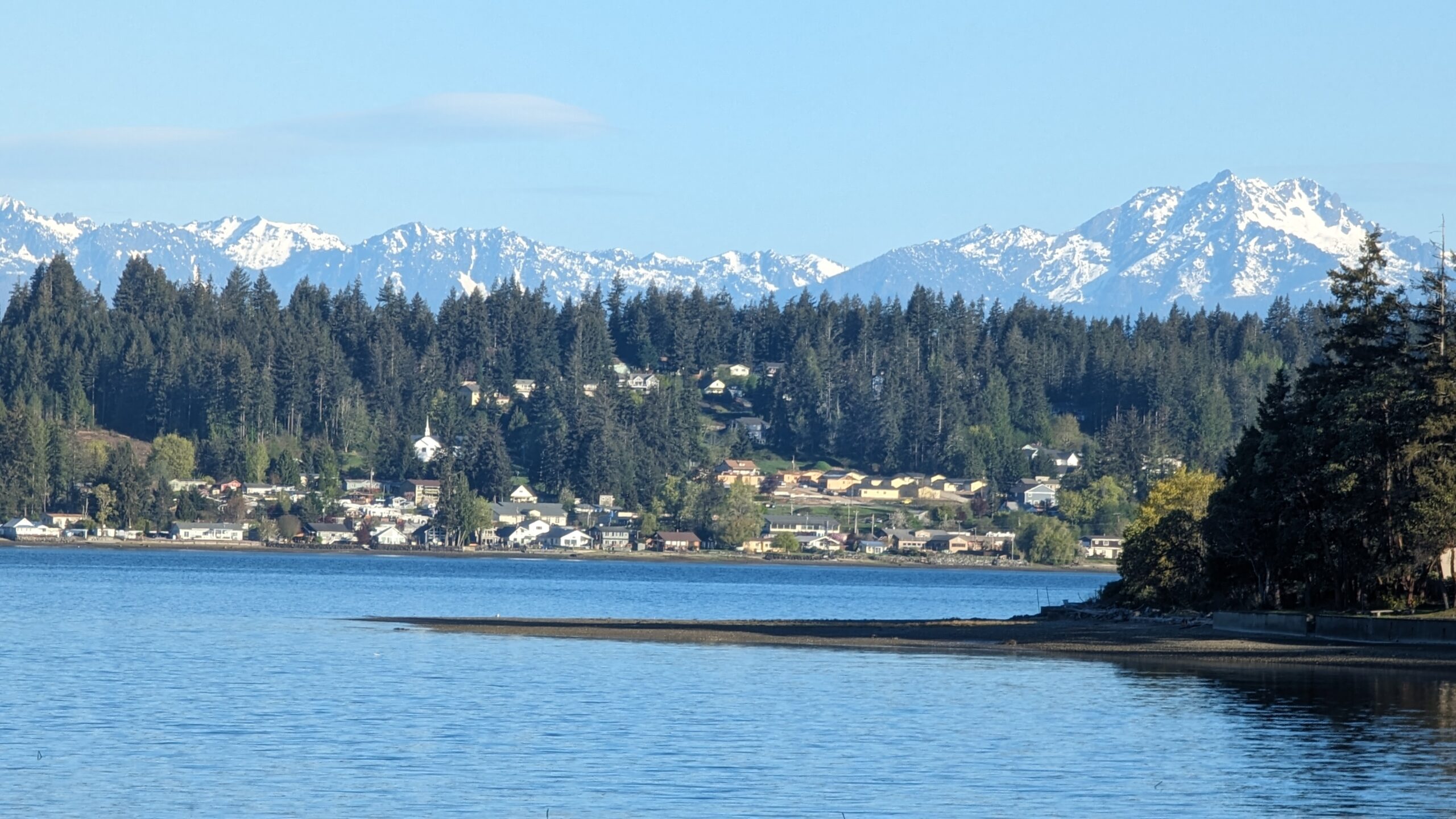
Other than four idyllic summers working at a Bible camp in rural Wisconsin, I had only ever lived in the city or the suburbs. I was reluctant to move somewhere so remote – away from the convenient comforts of city life. The move seemed like a grand leap of faith, but now, just three years later, I can’t imagine life anywhere else.
Shortly after our move, I started attending Christ Lutheran Church in Belfair, WA (just one small town over). At that time, the pastor was living part-time on the church property in her self-proclaimed “Parson-egg” camper. The church, located right on Hood Canal, had once been a retreat center and now housed a childcare center as well as the headquarters for a multi-congregation food program serving over 150 children in our local community. As I began to slowly fall in love with the people and the particularities of this church, it quickly became clear to me that my experience of “rural church” was just that: my experience. The rural church isn’t a monolith of corn and country churches, it’s richly diverse. I was curious to learn more as well as highlight the beauty and complexity of the rural experience.
I started this study with the intention of creating a companion guide specifically for rural and small town ministries that could come alongside the 2023 research project – highlighting case studies of vibrant rural and small town congregations. I sent out a few emails in December 2025 to a handful of ministry colleagues in the hopes of putting together a solid list of a few potential case study sites to interview in the new year. Instead I came back from Christmas Break to a list of nearly 30 congregations and growing! It was clear there were more than just a few stories to tell so we decided to pivot and send out a survey in the spring instead. The survey went out to rural and small town congregations with 10,000 or less residents who were experimenting with creating self-sustaining ministries and/or adding in at least one income stream outside of the offering plate (grants, social enterprise, in-kind donations, property sale, etc.). I’m eager to share with you a few of my early findings as my research team and I continue to analyze the data from the nearly 60 congregations who participated in the study.
- A rural congregation isn’t necessarily a small one. One of the things that’s intrigued me most so far is the demographics of the 58 congregations represented in the survey data. While certainly not representative of the entire rural church experience, 64% of the congregations in the dataset were medium-sized with an average online and in-person worship attendance of 50-300 people, only 31% were small (less than 50 in attendance), and 5% were large (more than 300 in attendance). Small congregations actually made up a greater percentage of the first Funding Forward research project than they did in this one. Even the budgets aren’t the smallest on the list! Just over 50% of the congregations had a budget of $100,000-$249,999 and 30% had a budget of $250,000-$499,999.
- The contexts varied greatly. We asked how far the congregation was from the nearest major city with a population of 50,000+: just 5% were located less than 10 miles away, 9% were 100+ miles away, with the majority (34%) located 26-50 miles away. While the largest industry present in the contexts was agriculture (83%), there were a variety of other industries represented from manufacturing (45%) to recreation (43%) to lumber (28%) to commercial fishing/seafood (17%) and more!
- Grants were the most popular income source outside of the offering plate. Nearly 70% of the congregations in the study had secured grant funding outside of its denominational/judicatory body. Of those who had secured grant funding, over half had received grant funding from a local community foundation (59%) and nearly 40% from private family foundations. I was amazed to see that nearly three-quarters of those who had received grants had secured funding from more than one place.
- Creative ideas for church funding abound. Outside of grants, the congregations who used (or were considering using) income sources outside of the offering plate were renting out a portion of the church property (59%), seeking in-kind donations (46%), selling church property (22%), repurposing money from an endowment fund (17%), selling products or services (15%), starting and maintaining a social enterprise or business (13%), generating income from donated land (e.g., farming, windmills, or oil production) (9%), forming another non-profit organization (9%) and/or impact investing (7%). While the categories are interesting, the stories are even better! We heard about a 4-week summer camp serving over 400 kids that provides childcare to their community, a monthly resale boutique run solely from in-kind donations, Community Supported Agriculture (CSA) that connects the church, CSA members, farmers, and the land, and so much more! These ventures were not only mission aligned (41% reported “very connected to the mission” and 34% reported “connected to the mission”), but also opened doors to relationships the church would have never had otherwise.
- God is at work in unexpected ways. As with the first research project, I had the joy of reading 53 testimonies to God’s work in their midst as these congregations added new income sources and/or created self-sustaining ministries. While I could summarize them, I think they are best experienced in the respondents’ own words. Here are a few of my favorites:
“On Sundays, there are few to no children in the pews. But throughout the week, dozens of children engage in God’s message of love and hope through the childcare center. Their parents have shared that the kids go home and share what they learned with their family, especially songs and stories. I see God at work through these children, who are-in a way- little evangelists for their families.”
“The Holy Spirit moves within the life of our congregation in the many generous ways parishioners meet a need . . . Living in a tourist area, the winters are quiet. Many folks are out of work. Our church hosts once a week FREE Community Dinners for ten weeks, and donations pour in. Very little of the church’s budget goes to host these dinners. This past year we served over 2,400 meals due to the generosity of our church members and people in the community. (This is done without putting a donation jar out at the dinners. We don’t want people to feel obligated to give).”
“We value our busy, people filled building 6 days a week! From babies to retired volunteers, there are relationships being formed and people being nurtured at every level. Caring for children and feeding vulnerable people are who we are and what we do – these two ministries are ingrained in our identity. We see people thrive when they embrace these visions. We [employ] folks who might not feel safe/empowered in other places, we enlist volunteers with purpose and tasks. God brings people together who might not otherwise have been connected.”
God is doing profound things in and through the ministry of rural and small town churches. It has been my privilege to hear tidbits of the amazing ministry these congregations are engaged in. In the next phase of this research project, my research team and I want to dig deeper into these stories so we can see how these unique contexts shape the way the Funding Forward process unfolds. We hope to bring you these stories in the words of those who know them best. For those serving in rural and small town communities, we hope you see your contexts reflected in these stories. For those serving in urban or suburban communities, we hope these stories widen your imagination about rural churches and inspire you with fresh ideas to take back to your own context.
To hear more about the findings of the survey as well as the next phase of this project, we invite you to join the Stewardship Leaders newsletter. You’ll receive our curated monthly newsletter with the latest in stewardship theology, practice, and research.