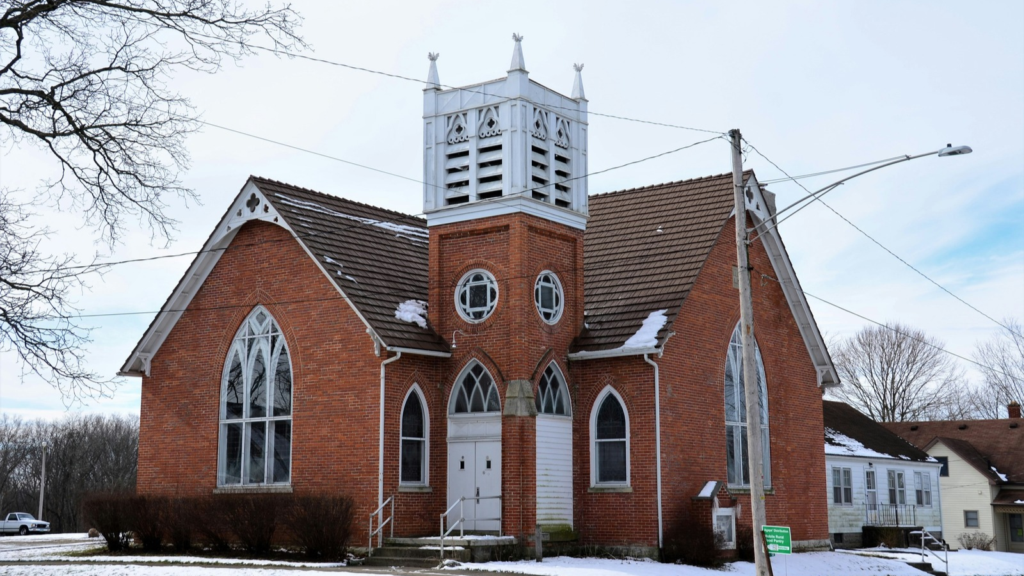
For so many congregations I sit with every day, their property feels much more like a burden than a blessing. As inflation, deferred maintenance, and costs of insurance and utilities increase, property becomes a larger and larger presence in the congregation’s budget crowding out other needed ministries. Property quickly becomes the main topic of discussion not just for facilities and finance teams but the broader church leadership. You might begin to wonder if you need a degree in real estate or property management just to go into ministry in today’s church.
When did church property become the centerpiece rather than the facilitator of the congregation’s mission? When did survival and maintenance overtake mission and ministry?
As I sit with congregations pondering these questions, I find so many parallels to the conversations we have had as a Luther Seminary community over the last few years. I’m amazed to admit that I have spent ten years of my life as a student or employee of Luther Seminary. This time is split into two distinct chapters: 2010-2014 (MA student and Assistant Director of the Stewardship Leaders Program) and 2020-2026 (Director of the Stewardship Leaders Program). While only six years apart, the seminary I came back to is not the one I left. So much changed during that time – the leadership, the students, the staff and faculty, even some of the curriculum! However, the biggest change I noticed early on was the shift in the ways the physical space was used.
Chapter One: The Blessing
During my first four years at Luther, I spent almost all of my time on campus. I lived on campus in Bockman Hall for my first semester. Throughout my first year, I ate most of my meals on campus in the seminary cafeteria and even worked on the seminary’s catering team. I have fond memories of brunch with my classmates on Fridays after our 8am Greek class, cozy afternoons by the fireplace in the coffee shop on the top floor of the Olson Campus Center, and countless evenings in the library reading room – cramming the long tables with as many friends as possible to make the studying all the more enjoyable.
When I joined the seminary staff in the summer of 2012, I officed out of Northwestern Hall. For much of my time as the Assistant Director, Rev. Chick Lane and I shared an office – by choice! – so we could easily collaborate throughout the day. Looking back, it’s almost easy to take for granted the rhythm of work during that season: walking across campus for meetings with colleagues, pausing for chapel and lunch at 11am, hosting events and conferences in Olson Campus Center, welcoming our distributed learning students to campus a few times a year, and enjoying the restaurants and coffee shops along Como Ave. The campus was the heart and soul of the community for faculty, staff, and students.
Chapter Two: The Burden
When I came back to Luther Seminary in January and February of 2020 for my interviews, it was immediately apparent that the seminary had changed. The buildings – once full of life! – were now very quiet. The cafeteria and coffee shop were no longer in use and almost all of the common spaces on campus were empty. It felt like a ghost town – a shadow of its former self! I was told during the interviews that the majority of Luther’s students now took many of their classes online and that campus was bursting at the seams a few times a year when students came back to campus for intensive sessions.
I started in my new role as the Director of the Stewardship Leaders Program in March 2020 – the same week that the Minnesota governor announced the “stay at home” order in response to the pandemic. It would be over a year before I would return to campus and even longer before I (and other staff and faculty) got back into a rhythm of life on campus again. Despite the tragic world circumstances that led to it, I’m so grateful for this year online. This time away from the physical property allowed me to get to know this new Luther Seminary community in a way I don’t think I would have been able to on campus.
During this season, the barrier between distributed students and those who lived on or commuted to campus evaporated. All students had the same access to classes and all classes were offered in the same modality. I spent just as much time with students from across the country as I did with those from Minnesota. I quickly realized that the students the Holy Spirit was calling to Luther Seminary had changed. They weren’t just geographically distributed. They trended older with more life responsibilities. Many were working full or part-time jobs and attending school part-time. In this equalizing online environment, I quickly came to know and love this new student body.
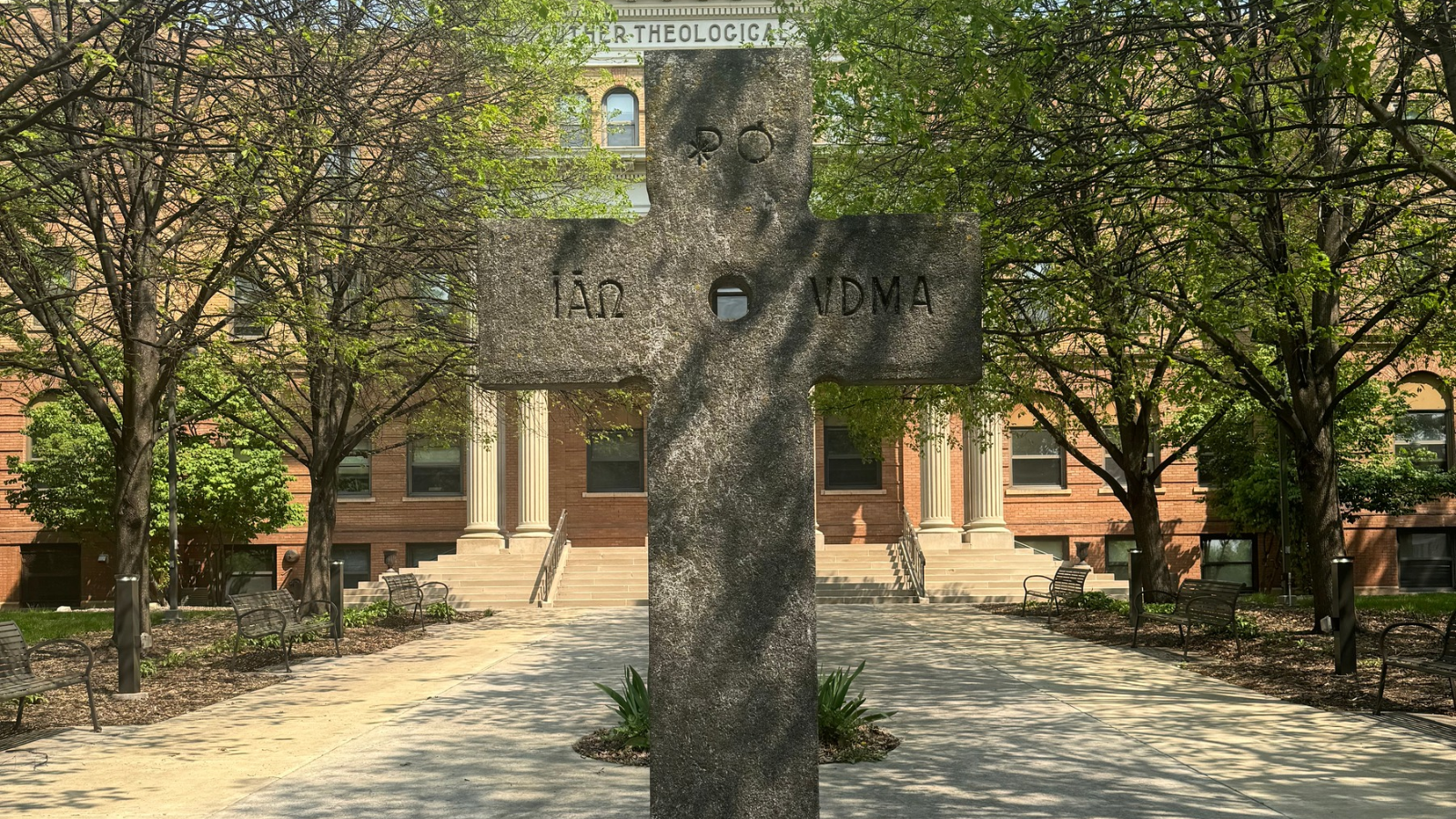
As we transitioned back to campus post-pandemic, it quickly became clear that the campus that so many of us knew and loved was no longer a fit for the seminary’s current student body or its mission. The campus technology made hybrid meetings and classes challenging. Distributed learning students who had an equalizing experience during the pandemic were now struggling to fully participate with others meeting in-person. After over a year at home, the aging infrastructure on campus was even more apparent and the needs for repairs and upgrades compounded. We also wondered what a more robust experience might look like for the students who did choose to live on or near campus.
Chapter Three: The Opportunity
Interestingly enough, across these two previous chapters, the mission of Luther Seminary never changed. It’s been the same since 1995: “Luther Seminary educates leaders for Christian communities called and sent by the Holy Spirit to witness to salvation through Jesus Christ and to serve in God’s world.” However, across these two chapters the ways we educate, the leaders we are educating, and the communities they are called to serve have radically changed. In 2017, Luther added this vision statement: “The Holy Spirit calls Luther Seminary to lead faithful innovation for the sake of the gospel of Jesus Christ in a rapidly changing world.” It became clear that this campus, which had served our mission well for so long, might actually be getting in the way of the mission and our ability to lead faithful innovation in a rapidly changing world.
We began to discern: What might God be up to in this moment? What might our community need? Where might God be calling us next?
These are questions you know well. Maybe your congregation, too, has wondered if your property is more of a burden than a blessing? Maybe you, too, have felt the discomfort of inhabiting a place that no longer matches the mission God is inviting you to join? Maybe you, too, have felt the pressure for the building and its survival to become the focus of your congregation’s leadership?
What’s the next faithful step God is inviting your congregation into?
No, the answer isn’t to just sell your space – and it wasn’t that for Luther either!
I won’t go into detail about the multi-year discernment process the seminary entered into to make its decision to move to a new campus. You can find out more about this process and the outcome on this site. It can be easy for those just reading the headlines to believe this is a decision that was rushed into or made out of desperation – which could not be further from the truth! Instead, I want to invite you into the messy middle with us and share with you a few of the steps we took that led to this decision in the hopes that they might be helpful for you or your congregation as you face these same questions:
- Make the Mission the Focus: It can be easy to let the property become the priority. While it may feel counterintuitive, this is a moment to spend even more time discerning God is up to and how God is inviting your organization to join in this work in the world. While Luther’s mission has remained the same since 1995, the way we were living out that mission had radically changed. We spent significant time considering what God was calling us to do and who God was calling us to serve in this season of Luther’s ministry. This discernment work created the foundation for our next strategic plan and the decisions about the property.
- Take a Data-Driven Approach: In the midst of the discernment, we also began to take an honest look at the campus. We worked with experts to conduct a Property Condition Assessment (PCA) to get a clear picture of the property condition as well as the extent of the deferred maintenance. It can be tempting to shy away from these numbers and rely on “back of the napkin” estimates or best guesses. This type of data-driven analysis can give you an honest picture of the realities your property is facing so you can make clear and informed decisions. This isn’t work your congregation can do on its own, experts will be needed.
- Engage the Community: Too often big decisions about property are made in a small room with little input from those invested in the space only compounding the grief that comes with the impact of any decisions made. Luther took its time with this decision, inviting participants from across the Luther Seminary community to discern together, weigh in on the data, and express their needs and concerns. Congregations who have engaged this work well have not only brought their leadership teams and congregants into the conversation but have also reached out to their community members to understand the hopes, challenges, and opportunities of their neighborhood.
- Create Space for Lament and Hope: Our communities need the opportunity to share memories of these spaces and to grieve their loss (even if you aren’t leaving your space behind!), while also creating a forum to dream about what is coming next. Like the crowd in Ezra 3, we are allowed to feel all of these emotions all at once! It’s imperative to attend to the emotions all the way through the process or these emotions can keep you from moving forward. We’ve done this by listening to our longings and losses, stopping to break bread together as we reflect on these spaces, creating community art, and centering chapel services around this season of transition and change.
- Dig Into History: Throughout this process, we began digging deeper into Luther Seminary’s history and realized that this wasn’t Luther Seminary’s first move – far from it! The campus has moved more than a dozen times over its 157 year history. As you look at your congregation’s history, how has its space changed over time? How might these changes offer an expanded perspective to those who have only known the congregation’s space as it is today?
- Act Before Things Get Desperate: I appreciate that Luther engaged in this process before we were forced to financially. We were able to give ourselves multiple years to engage experts, solicit data, discern, grieve, and gather around these questions. We could move at the pace of the Holy Spirit, rather than one dictated by our coffers. I’ve sat with many congregational leaders who are actively putting off decisions about their space until they simply can’t anymore, but the hard reality is when you do this finances not mission will lead the way in your decision making and many creative options you could have once explored will likely now be off the table.
As your congregation – or others you love – face challenges around your church property, I encourage you to be open to being surprised by the opportunities you never expected. No one could have imagined this multi-year discernment process would have led the Seminary to leave our beloved campus and move across town to a gorgeous shared space along the river in downtown Minneapolis. Like a butterfly breaking out of its chrysalis, we are leaving behind a place that has nurtured us and served our mission well, and yet as of late has become just too confining as we live into who God is calling us to be today. Letting go of these buildings doesn’t mean we’ve let go of our mission – instead it means we can now head into this season with our hands open, freed to live even deeper into what God is calling us to do and to be. May God open your imagination to new ways of using your space, unexpected open doors, neighbors that become partners, and ways of living into God’s mission in the world that outstrip what you could ever expect or imagine.