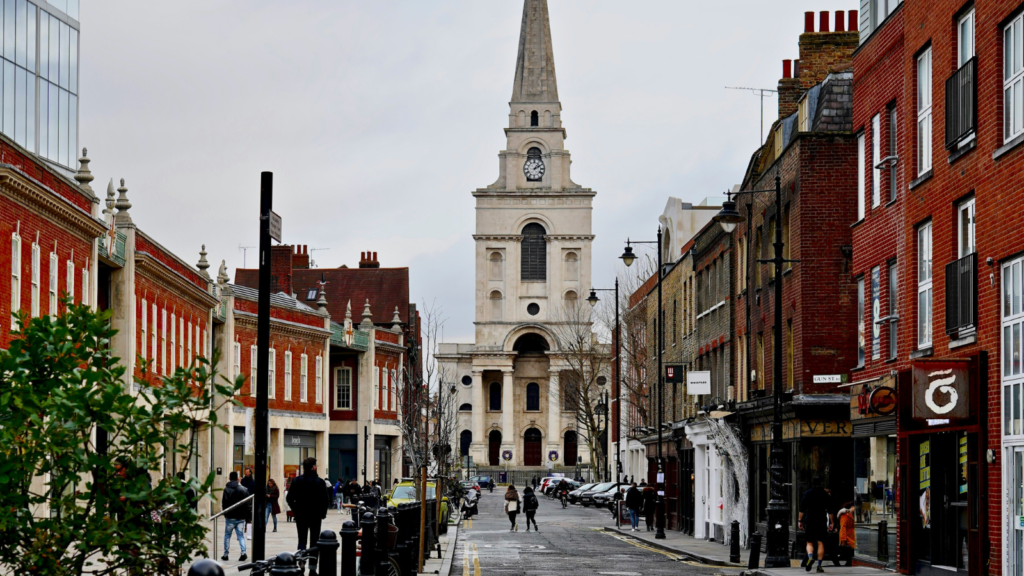
This summer, I had the opportunity to travel to London with other Episcopalians from around the country to visit Church of England churches, talk to clergy, hear from parishioners, and sometimes even get to serve. What was it like? It reminded me of a scene from one of the greatest movies of all time, You’ve Got Mail, when Tom Hanks discovers his unknown pen pal, Meg Ryan, is as attractive as her personality. Tom Hanks conveys the epitome of excitement, relief, and acute elation as he whisper-screams to his friend—”SHE HAD TO BE (pretty), SHE HAD TO BE!”—while manically grasping the iron railing and trying to shake it. Before I left for this trip, I studied ecclesial and evangelistic theologies, I read about healthy churches, and I had even read about some of the churches we visited, but I needed to see these kinds of vibrant churches with my own eyes. When I did, I was no less manic than Tom Hanks.

Hear me out. What I saw was that God was present in these churches and communities. Though all the churches were officially Church of England, they looked different from each other and did things differently. Their secret was not about programming, nor did they have much money. They were not shiny churches; they were alive churches filled with alive people. They were fundamentally and intentionally relational. The churches served the parish community. They loved their neighborhoods and towns and they loved each other. I witnessed what it looks like when a church loves God and loves others. It is extremely simple and quite profound.
Confessing Jesus
Sophie Cowan, vicar at St. Mary Stoke in Ipswich, England, an economically divided waterfront town about an hour train ride away northeast of London, modeled what the centrality of Jesus looks like in church. Three years ago, she arrived for her new job in an aging church that was perfectly fine with how things were. She was committed to waiting a year before making any big changes, but six months in, she had watched forty different families visit the church and never return. She said she was heartbroken and could not wait any longer.
She moved the formal sung Eucharist service to Wednesdays and started a contemporary service Sunday mornings. The congregation was largely unimpressed. But she believed Jesus, preached Jesus, discipled people to follow Jesus at her kitchen table every Wednesday night, and people not only started coming, they started believing, too. In the following two years, they started two children’s services during church, moving from zero children to many, as well as about a dozen “outreach” ministries each month for the unchurched, all lay-led and all about Jesus. Sophie told us the “least Christian” ministry they had was a music program in which musicians in the community offered free music lessons to kids in the community. They prayed together, the kids learned Christian music, and the kids led worship several times a year. I asked a man who was helping prepare tea for after the service what kinds of changes he had seen in the church since Sophie started. He grinned and said, “I met Jesus!”
Witnessing about Jesus
We visited Holy Trinity Church, Harrow Green, Leytonstone (in London). Polly Kersys-Hull was the vicar and had helped her church build real relationships in their parish. Every Tuesday they hold a parish food pantry in their sanctuary space. The Tuesday we visited, they blasted great 60s music on the church speakers, offered treats and tea, set up tables with games and dominoes, and greeted everyone who came in with a team of people who were ready to love their neighbors in the name of Jesus. Holy Trinity created a place for their community to come and be together, no matter who you were or what you believed, every week. One of the volunteers was named Jason and he was relatively new. He had come to receive food from the pantry week after week. He finally asked Polly about Jesus, who he kept hearing about, and slowly built a relationship with her. She invited him to church, but when he tried to come in on a Sunday, he could not do it. The next week he tried again and was able to come into a church where little kids were not always quiet or seated, but where he heard, again, about Jesus. He gave his life to Christ, he said, and a few weeks later was asked to pray at St. Paul’s Cathedral as a brand-new Christian. He was delighted to share his story and then jump in to serve his community.

Discipleship to Jesus
We met a man named Paul and within a matter of minutes found out he was an alcoholic and had become a Christian in an Alpha course at one of the churches. He said when he walked in, people saw him as a person and welcomed him. Prior to that, he had only experienced years of being known by his family, friends, and community as “a drunk.” He loved hearing about Jesus, and he loved being in a community, but when the course ended, he did not know what to do. He asked the priest if it might be possible to do Alpha again and his priest told him, “You can do Alpha as many times as you want. But I think you should come again and this time help lead it.” Paul said he could not believe someone thought he had enough value to help lead Alpha. He did not have to stay in the same place but was invited into more. While leading Alpha, he became a Christian.
I sat next to an 80-year-old woman in a service who left after the singing to teach in the new children’s ministry. She was warm and welcoming, she loved the children, and then after the service, she got in line to receive from the food pantry the church offered. Discipleship, we saw repeatedly, meant that people were not only folded into the life of the church, but they were equipped for ministry and given opportunities to grow. There were not “insiders” and “outsiders” either because people were new to faith or because of money or needs. We saw a model of discipleship in which communities were able to give and to receive from each other as they grew in Christ together.
Converts
The most astonishing thing—a Tom-Hanks’-sort of euphoria—was in realizing I was talking again and again to converts, not just “experts” who had figured things out. Even people who had been in the church for decades experienced the life-changing reorientation of Jesus in their church and in their communities. I loved getting to talk to faithful clergy who were dedicated to confessing, witnessing, and discipling people to Jesus. But the part that was revolutionary for me, the part I needed to see and to hear—because I think we all need to see and to hear—was regular people describing the life-changing joy of meeting Jesus by the power of the Holy Spirit and being welcomed into a community that cared deeply for the wider community in which they lived. I want to hear those stories everywhere. May we all have reason to be a little more like Tom and when we see and hear stories of lives changed by Jesus exclaim with abandon, “IT HAD TO BE!”